Abstract:Evest is regulated, yet exposure reports cite withdrawal issues and aggressive managers. Verify the license on the WikiFX App before you deposit.
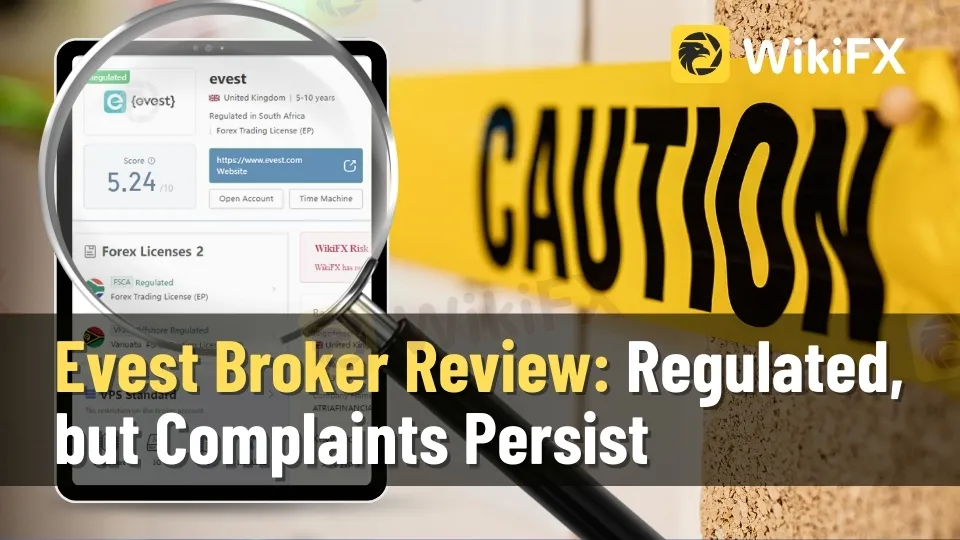
Evest is a regulated broker on record, but the exposure cases and complaint pattern raise real safety concerns for traders funding an account today. This Evest Broker Review focuses on regulated status while highlighting negative cases, so readers can spot risks early and double-check details using the WikiFX App.
Evest is presented as an online trading platform offering access to stocks, currencies (forex), commodities, indices, and cryptocurrencies, with a proprietary app and web trading. The broker profile also lists key trading terms like leverage (up to 1:400), a $250 minimum deposit for the Silver tier, and spreads that vary by account level.
 Contents
Evest Regulation Status (Regulated)
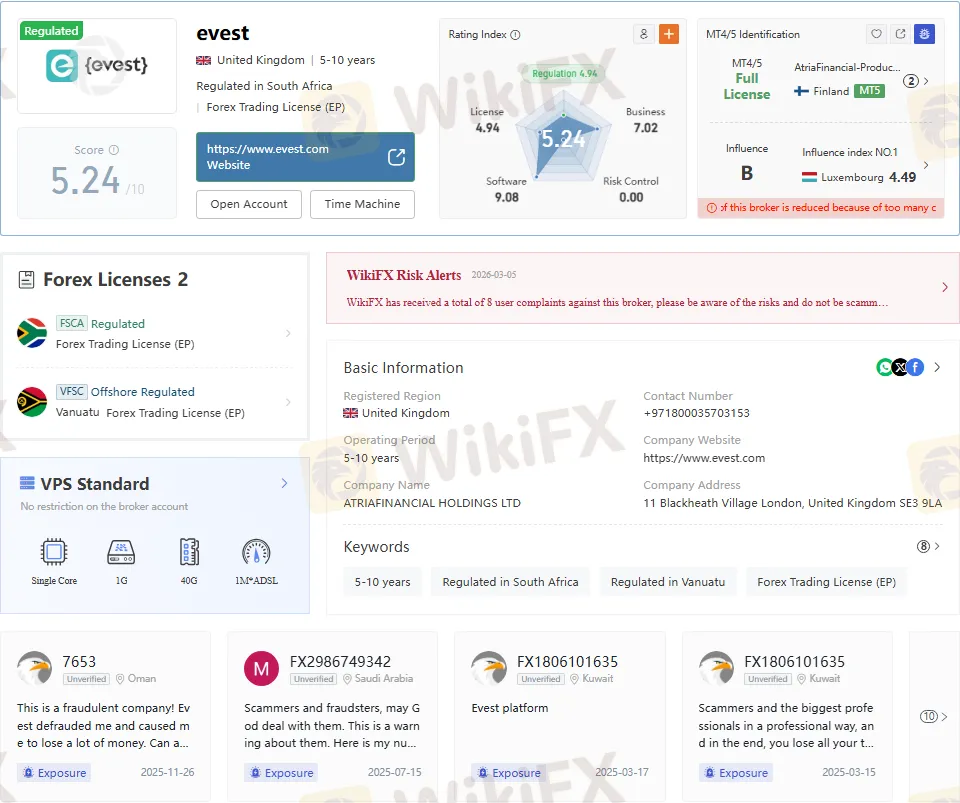
Evest shows two regulatory entries on its broker page: FSCA listed as “Regulated” (South Africa) and VFSC listed as “Offshore Regulated” (Vanuatu). The page also displays the FSCA license number 36060 and the VFSC license number 17910, which are important details to verify before sending funds.
Regulation helps, but it doesn‘t erase operational risk—especially when a broker’s complaint volume pulls down its platform score and credibility signals. If youre doing an Evest Regulation check, use the WikiFX App to confirm the regulatory status and compare it against user exposure trends in one place.
Evest Exposure Review: Negative Cases
Multiple exposure posts on the broker page describe users alleging they were pushed to deposit more, then faced obstacles when trying to withdraw or reduce risk. One complaint describes an account manager encouraging additional deposits, discouraging withdrawals, and the user reporting a total loss after following instructions.
Other exposure language is even more severe, with allegations of fraud, calls for help filing formal complaints, and claims that the interaction was designed to extract more deposits. A separate exposure states that the client was pressured to sell personal assets (a car, gold) to “get money back,” which is an extreme red flag in any Evest scam alert context.
These posts do not prove every claim, but they do show a consistent risk theme: account-manager pressure, deposit escalation, and withdrawal anxiety. For traders researching “Evest exposure” or “Evest Complaints,” patterns matter because they often reveal how problems show up in real accounts.
Where The Risk Concentrates (Even If Regulated)
The first risk area is withdrawal friction—not just a stated processing timeline, but also user narratives describing refusal, delays, or pressure to keep funds on the platform. Even though the page lists a $5 withdrawal fee and notes that withdrawals can take up to 7 business days, negative cases focus less on fees and more on the ability to actually complete withdrawals smoothly.
The second risk area is sales behavior: repeated reports mention aggressive guidance, encouragement to deposit more, and “recovery” promises after losses. When a brokers service model feels like persuasion instead of execution-only support, it can turn normal trading risk into a manipulated decision cycle—especially for newer forex traders.
The third risk area is the regulatory mix itself: FSCA oversight is a meaningful credential, but the page also shows an offshore VFSC license, and traders may be onboarded under different entities. In practical terms, that can affect complaint routes, dispute handling, and how protected you really are when something goes wrong.
Practical Steps Before Depositing
Start by verifying Evests listed license details inside the WikiFX App, then match the entity you are signing with to the regulator shown on the profile. Next, test the process with a small deposit and an early small withdrawal, because a successful withdrawal is often the clearest “reality check” before scaling up.
Avoid sending more money to “recover losses” if you feel pressured by an account manager, and treat any suggestion to liquidate personal assets as a stop signal—not motivation. If you believe youve been misled or blocked, document everything (chat logs, call times, transaction IDs) and submit an exposure report so other traders can assess the same broker behavior.