

Global Broker Regulation Inquiry App
About WikiFX
English
简体中文
繁體中文
English
Pусский
日本語
ภาษาไทย
Tiếng Việt
Bahasa Indonesia
Español
हिन्दी
Filippiiniläinen
Français
Deutsch
Português
Türkçe
한국어
العربية
اردو


Best Forex Brokers In Malaysia For 2026: Top 7 WikiFX Verified Trading Platforms

WikiFX
|


Abstract:This guide highlights seven of the best trading platforms for Malaysian traders, selected based on their WikiFX Broker Scores, trading conditions, platform offerings, regulatory background, and overall reputation within the global trading industry. Whether you're opening your first trading account or looking to switch brokers, these platforms offer a combination of competitive pricing, robust technology, and comprehensive trading tools suitable for different trading styles.
 Contents
Best forex brokers in Malaysia:
- AvaTrade — Strongest regulatory and risk control profile in this list, six jurisdiction oversight
- FXCM — Four platform choices including TradingView Pro and Capitalise AI, low $50 minimum deposit
- EC Markets — Raw spreads from 0.0 pips on ECN and PRO accounts, four regulator coverage
- GTCFX — No minimum deposit on its Standard account, over 27,000 tradable instruments
- ATFX — Long standing FCA and ASIC licensing
- STARTRADER — Low $10 entry threshold and copy trading with competitive spreads
- XM — $5 minimum deposit, 1,400+ instruments, 30 day demo account
| Broker | Regulation | Min. Deposit | Max. Leverage | Demo |
|---|---|---|---|---|
| AvaTrade | ASIC, CBI, FSA, FFAJ, ADGM, FSCA | $100 | 1:400 (pro) | Yes |
| FXCM | FCA, ASIC, CySEC, ISA | $50 | 1:1000 | Yes ($20k) |
| EC Markets | FCA, ASIC, FMA, FSCA | $10 (ECN/STD) | 1:1000 | Yes |
| GTCFX | FCA, ASIC, SCA/CMA | $0 (Standard) | 1:2000 | Yes |
| ATFX | FCA, ASIC, SFC, CySEC, FSCA | $50 | 1:500 | Yes ($50k) |
| STARTRADER | ASIC, FSCA | $10 to $50 | 1:1000 | Yes |
| XM | CySEC, DFSA, ASIC, FSCA | $5 | 1:1000 | Yes (30 days) |
Best forex brokers in Malaysia: comparison table
1. AvaTrade
Regulation: ASIC (Australia), Central Bank of Ireland, FSA and FFAJ (Japan), ADGM (UAE), FSCA (South Africa), FSC (British Virgin Islands, offshore)
Founded: 2006
Headquarters: Dublin, Ireland
AvaTrade has operated since 2006 and has built one of the broadest regulatory footprints in this list, holding licenses across six jurisdictions. Its parent structure includes separately licensed entities for Australia, Japan, Ireland, the UAE, and South Africa, which gives the broker flexibility to serve clients under different regulatory regimes depending on residency.
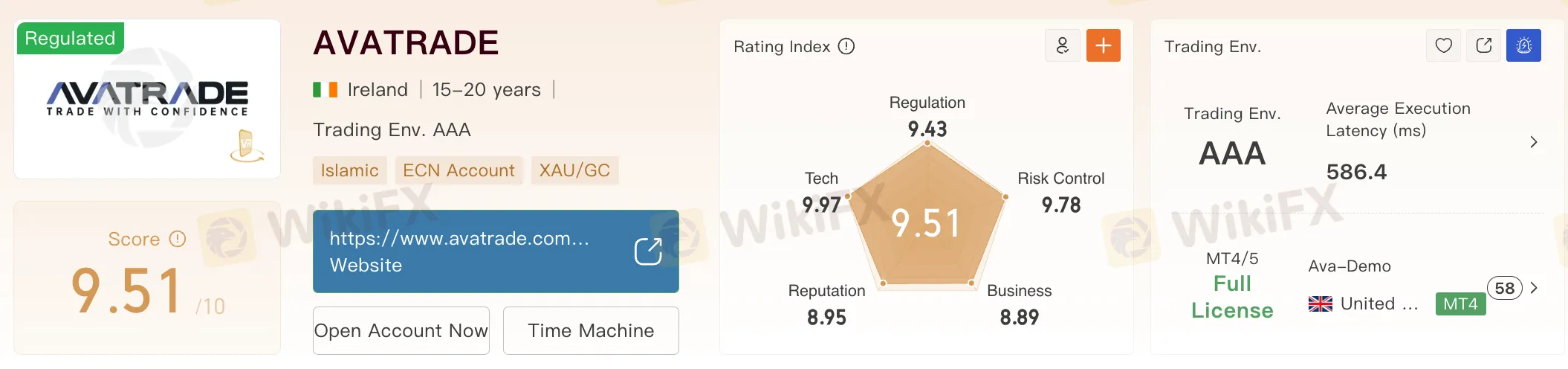
On WikiFX's trading environment testing, AvaTrade posts an AAA rating with an average execution speed of 586.4ms and consistently low slippage. The broker supports MT4, MT5, its own AvaTradeGO app, WebTrader, and AvaSocial for copy trading, alongside AvaOptions for FX options trading. Malaysian traders typically fund a standard account with a minimum deposit of $100, and EUR/USD spreads sit around 0.9 pips.
View WikiFXs full review on AvaTrade broker here: https://www.wikifx.com/en/dealer/8261153765.html
2. FXCM
Regulation: FCA (UK), ASIC (Australia), CySEC (Cyprus), ISA (Israel)
Founded: 1999
Headquarters: London, United Kingdom
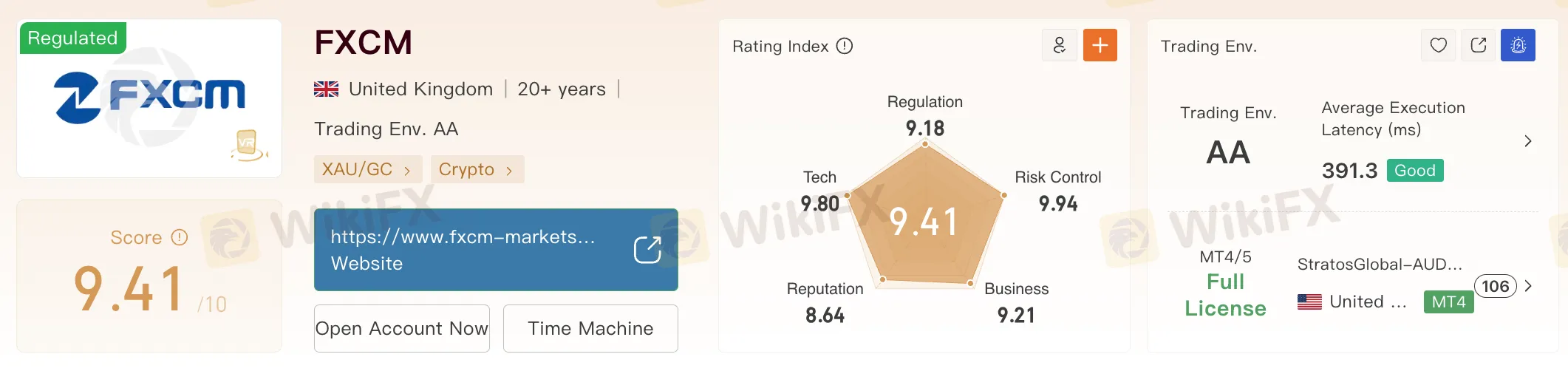
WikiFX highlights: AA rated Trading Environment, average execution speed of 360.9ms
FXCM has operated for over two decades under the Stratos Markets Limited entity and carries licenses across four jurisdictions. The broker distinguishes itself with a four platform lineup: its proprietary Trading Station, TradingView Pro, MT4, and Capitalise AI for algorithmic strategy building, all available across desktop, web, and mobile.
The minimum deposit sits at $50, notably lower than most brokers in this list, and the demo account comes preloaded with $20,000 in virtual funds on a 24/5 basis. Leverage scales down as account equity rises, from 1000:1 below $5,000 equity to 100:1 for FX above $50,000. FXCM does not currently accept clients from several markets including the US, Canada, the UK retail segment, the EU, Hong Kong, Australia, Israel, and Japan, so Malaysian traders should confirm onboarding eligibility directly with the broker.
View WikiFXs full review on FXCM broker here: https://www.wikifx.com/en/dealer/0001698019.html
3. EC Markets
Regulation: FCA (UK), ASIC (Australia), FMA (New Zealand), FSCA (South Africa), FSA (Seychelles, offshore)
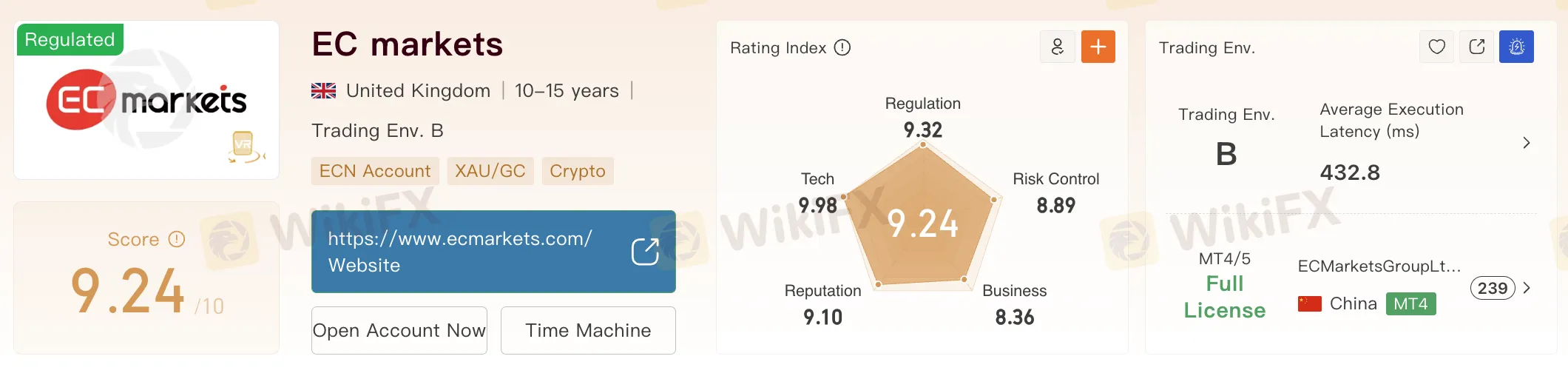
Operating period: 10 to 15 years
EC Markets trades under EC Markets Group Ltd, registered in the United Kingdom and authorised by the FCA, with additional coverage from ASIC, New Zealand's FMA, and South Africa's FSCA. The broker offers three account tiers: STD and ECN accounts both open with a $10 minimum deposit, while the PRO account requires $5,000.
Spreads on the ECN and PRO accounts start from 0.0 pips with a AAA trading cost rating on WikiFX, though the STD account carries wider spreads from 1.0 pips. Leverage runs up to 1:1000 across account types, which is high and requires careful risk management. MT4 and MT5 are both fully licensed, and the broker supports Malaysia Ringgit as a local deposit currency option with instant processing.
View WikiFXs full review on EC Markets broker here: https://www.wikifx.com/en/dealer/2001150169.html
4. GTCFX
Regulation: FCA (UK), ASIC (Australia), SCA/CMA (UAE), VFSC (Vanuatu, offshore) Founded: 2012
Registered: United Arab Emirates
GTCFX has grown to serve close to a million clients across more than 100 countries since 2012. The broker's biggest draw for cost conscious traders is its Standard account, which carries no minimum deposit requirement and offers leverage up to 1:2000, among the highest ceilings in this roundup. Traders who want tighter spreads can step up to the Pro account ($50 minimum, 0.9 pip average spread) or the ECN account ($3,000 minimum, spreads from 0.0 pips with a $5 per lot commission).
Across its eight tradable asset classes, GTCFX offers more than 27,000 instruments spanning forex, gold, precious metals, energy CFDs, and equity indices, though it does not currently offer cryptocurrencies, bonds, options, or ETFs. Trading Environment testing on WikiFX rates the broker AAA overall, with particularly strong marks for trading cost (AAA) and swap rates (AAA).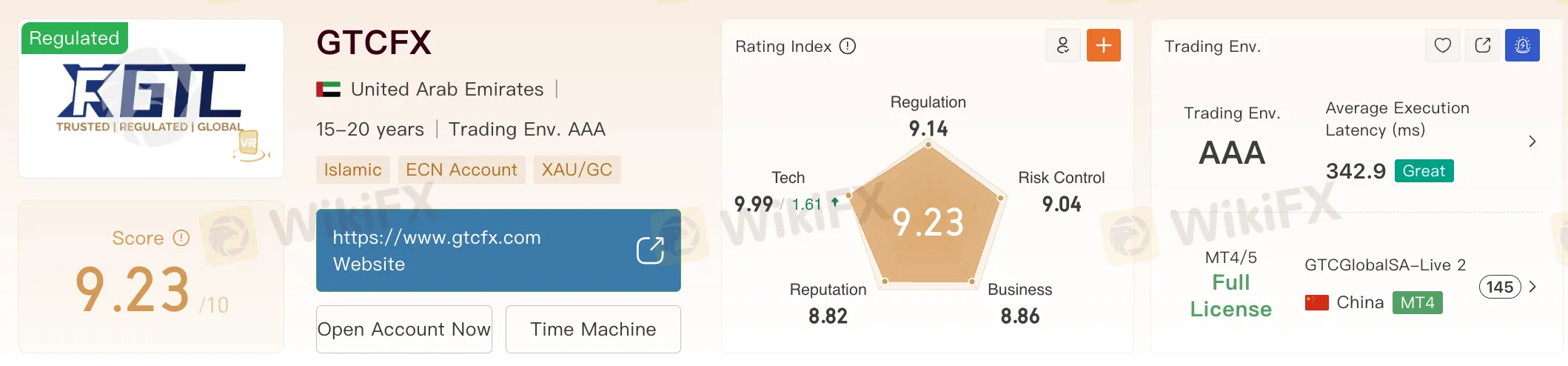
View WikiFXs full review on GTCFX broker here: https://www.wikifx.com/en/dealer/8791637328.html
5. ATFX
Regulation: FCA (UK), ASIC (Australia), SFC (Hong Kong), CySEC (Cyprus), FSCA (South Africa), SERC (Cambodia), FSA (Seychelles, offshore)
Founded: 2014
Headquarters: London, United Kingdom
ATFX has built one of the broadest license portfolios in this list across nine jurisdictions, and it remains a widely recognised name in the Malaysian retail forex space. The broker offers Standard, Raw, Raw Pro, and Edge account types with a $50 minimum deposit, leverage up to 500:1, and support for both MT4 and MT5.
ATFX operates under one of the most extensive multi-jurisdictional regulatory structures among brokers listed on WikiFX. With active licences spanning the UK, Australia, Hong Kong, Cyprus, South Africa, Cambodia, and Seychelles, the broker is subject to the requirements of multiple financial authorities across both established and emerging markets.
WikiFX field surveys have verified ATFX's physical office presence in both the United Kingdom and Hong Kong, with operational office status confirmed in both locations. This physical transparency is an additional indicator of the broker's legitimacy. It is worth noting that ATFX has also received authorisation to establish a Representative Office in Colombia, further reflecting its global expansion trajectory.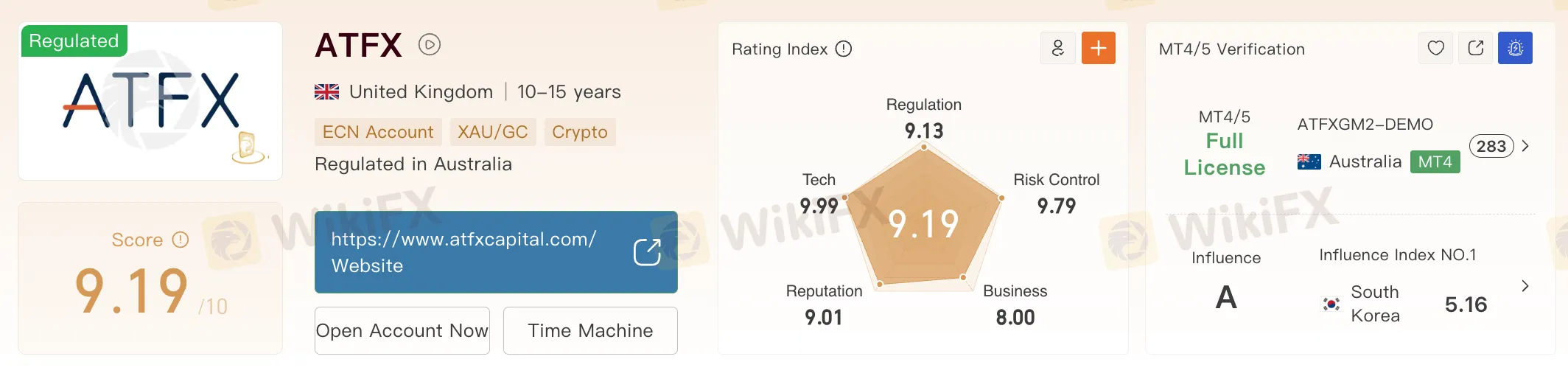
View WikiFXs full review on ATFX broker here: https://www.wikifx.com/en/dealer/5121914749.html
6. STARTRADER
Regulation: ASIC (Australia), FSCA (South Africa), FSA (Seychelles, offshore)
Operating period: 10 to 15 years
Registered: Australia
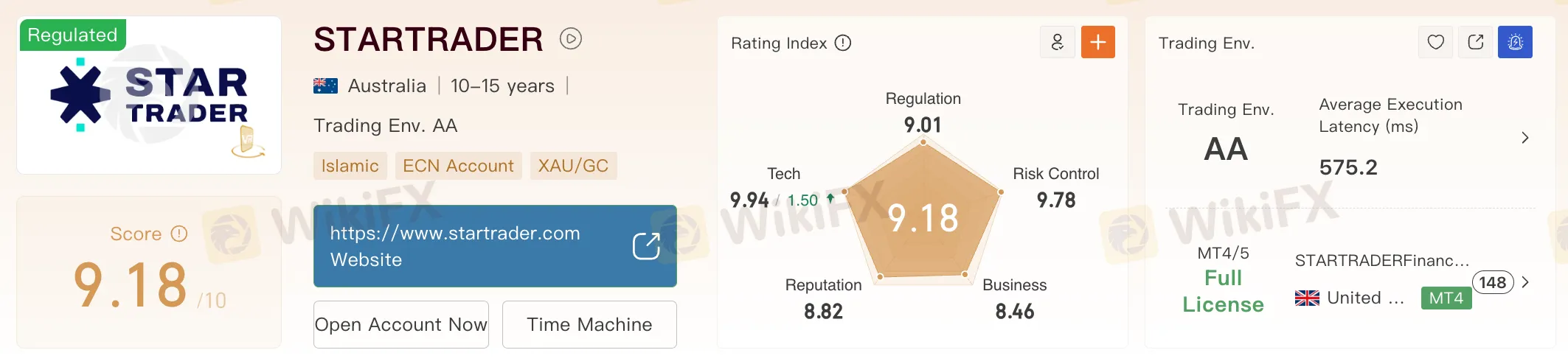
STARTRADER rounds out this list with an accessible entry point, a minimum deposit as low as $10 across both its Standard and ECN accounts. The broker supports over 1,000 instruments spanning more than 50 forex pairs alongside shares, indices, metals, and commodities, and offers copy trading through its own app in addition to MT4 and MT5.
STARTRADER's regulatory index (9.18) trails the rest of this list, reflecting that its core licensing rests primarily with ASIC and FSCA, with its Seychelles FSA registration serving as an offshore layer rather than a top tier jurisdiction. Trading Environment testing on WikiFX rates the broker AA overall, with strong AA marks for slippage and cost, though execution speed comes in at a middling C grade.
View WikiFXs full review on STARTRADER broker here: https://www.wikifx.com/en/dealer/2277676718.html
7. XM
Regulation: CySEC (Cyprus), DFSA (UAE), ASIC (Australia), FSCA (South Africa), FSC (Belize, offshore)
Founded: 2009
Headquarters: Cyprus
XM is one of the most globally recognised names in retail forex, and its WikiFX profile reflects a broker built for accessibility. The Standard and Ultra Low Spread accounts both open with a minimum deposit of just $5, among the lowest in this list, and the broker offers a 30 day demo account for traders who want to test conditions before committing capital.
Across more than 1,400 tradable instruments, XM does not currently offer cryptocurrency CFDs, bonds, options, or ETFs, though its forex, precious metals, indices, and thematic index coverage is broad. Execution testing on WikiFX shows an AAA Trading Environment rating with an average speed of 122.8ms, among the fastest of the seven brokers reviewed here. XM also runs a tiered deposit bonus of 20% up to $2,000, though this is not available under its CySEC regulated European entity.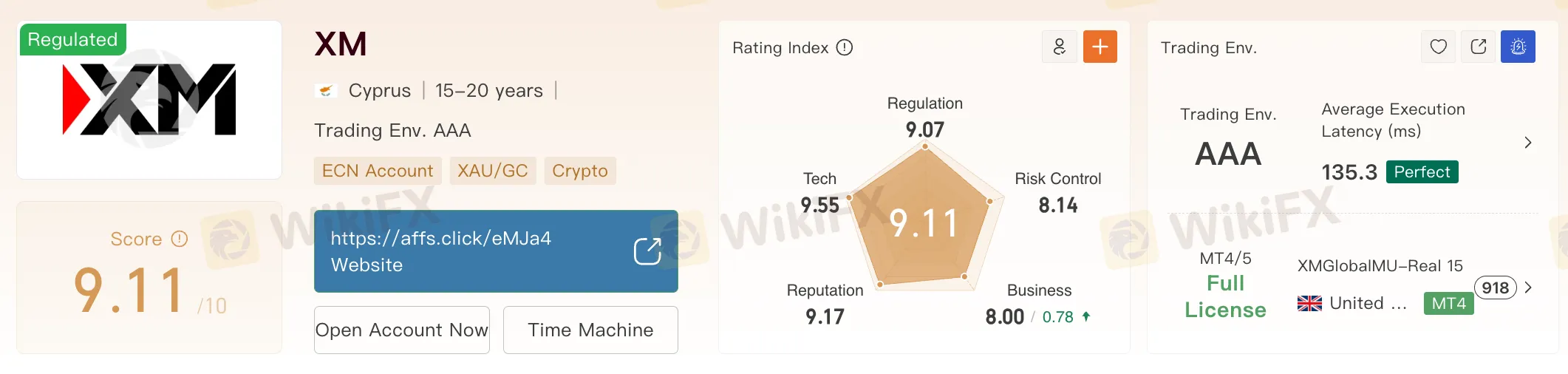
View WikiFXs full review on XM broker here: https://www.wikifx.com/en/dealer/0001461138.html
How to choose a forex broker in Malaysia
Check the regulatory footprint, not just the country of registration. A broker licensed by the FCA or ASIC generally offers stronger investor protection than one relying solely on an offshore registration such as Seychelles or Vanuatu. Most brokers in this list combine both, so look at which entity you would actually be onboarded under.
Search WikiFX for live complaint and exposure records before depositing. Scores and risk labels update as new information comes in, as this article's ATFX section illustrates. A broker's historical reputation is not the same as its current standing.
Test the demo account first. Every broker in this roundup offers one. Use it to judge execution speed and spread behaviour under real market conditions before funding a live account.
Compare minimum deposits against your risk tolerance. GTCFX (Standard) and XM both allow entry from $5 to $0, which suits traders who want to start small, while EC Markets' PRO account and GTCFX's ECN account require thousands of dollars in capital.
Confirm Malaysia Ringgit deposit support and local payment rails. EC Markets, for example, explicitly lists Malaysia as a supported instant deposit currency with no processing fee, which can save on currency conversion costs.
Understand leverage limits before opening an account. Several brokers here offer leverage up to 1:1000 or higher. High leverage magnifies both gains and losses, and Malaysian traders new to forex should generally start conservatively regardless of what ceiling the broker offers.
How to start trading forex in Malaysia
- Choose a broker and verify its current WikiFX standing. Cross check the broker's live score, regulatory disclosures, and any active alerts before registering.
- Complete registration and identity verification. Regulated brokers require a copy of a government issued ID and proof of address as standard know your customer procedure.
- Select an account type. Match the account to your capital and experience level, standard accounts for lower deposits, ECN or Pro accounts for tighter spreads once you have more capital to commit.
- Fund your account. Most brokers in this list support bank transfer, cards, and e-wallets, and several accept direct Malaysia Ringgit deposits.
- Practise on a demo account before going live. Every broker reviewed here provides one, typically with virtual balances between $20,000 and $50,000.
- Place your first trade with a defined risk plan. Set stop loss levels appropriate to the leverage you are using, particularly on accounts offering 1:500 leverage or higher.
Forex regulation in Malaysia
Forex and CFD trading is accessible to Malaysian residents, but it operates in a different regulatory position than locally licensed capital market activities.
Securities Commission Malaysia (SC): The SC is the primary regulator overseeing capital market intermediaries operating within Malaysia. It also maintains an Investor Alert List flagging entities it considers to be operating without proper authorisation or engaging in conduct that warrants caution, which is the list referenced in the ATFX section above.
Bank Negara Malaysia (BNM): Malaysia's central bank oversees foreign exchange administration rules that primarily concern currency conversion and cross border remittance, rather than regulating individual retail CFD brokers directly.
Practical takeaway: Most of the brokers reviewed here are licensed by overseas regulators such as the FCA, ASIC, or CySEC rather than by the SC directly, since retail forex CFD trading with international brokers is a common but not locally licensed activity for Malaysian residents. This makes it especially important to check a broker's WikiFX profile and any SC Investor Alert List entries before depositing, since Malaysian residents trading with an offshore broker generally cannot rely on SC administered compensation schemes if a dispute arises.
Conclusion
There is no single best forex broker for every Malaysian trader. AvaTrade currently holds the strongest overall WikiFX score in this group, built on its six jurisdiction regulatory spread and near perfect risk control rating. Traders who want to start with little to no capital should look at GTCFX's Standard account or XM's $5 entry point. Those prioritising tight, raw spreads may prefer EC Markets or GTCFX's ECN tier. Whichever broker you choose, check its live WikiFX profile immediately before depositing, since scores, complaint counts, and regulatory alerts are updated continuously and can change the picture significantly.
Disclaimer:
The views in this article only represent the author's personal views, and do not constitute investment advice on this platform. This platform does not guarantee the accuracy, completeness and timeliness of the information in the article, and will not be liable for any loss caused by the use of or reliance on the information in the article.
Related Brokers
WikiFX Broker
Latest News
iFX Brokers Review: Is Your Deposit Safe?
WikiFXONE ROYAL Faces SCM Malaysia Warning , What Traders Should Verify Before Funding an Account
WikiFXASIC Crackdown Hits 5-Year High: 150 Rogue Operators Banned
WikiFXMoneycorp Review: Is This Broker’s License Really Telling the Truth?
WikiFXBYBIT Review: Unregulated Broker Warning After Withdrawal Complaints and Forex Profit Disputes
WikiFXSECP Refers Blink Capital to FIA Over Rs446.6m Alleged Fraud
WikiFXHow to Start a Forex Broker in 2026: Build the Operating Model Before You Buy the Platform
WikiFXPEMAXX GLOBAL Review 2026: Complaints, Withdrawals, and Risk Signals
WikiFXSaxo Bank Review 2026: Regulation, High Fees, and Clone Risks
WikiFXFINEX Review: Regulated Broker, But One Trader’s Margin Call Complaint Raises Alarm
WikiFX